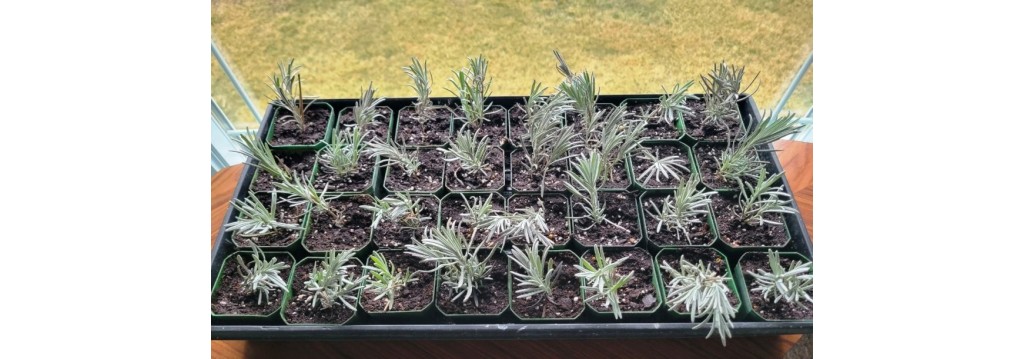
How to Propagate Lavender from Cuttings: Easy Spring Propagation Guide
If you already grow lavender, there’s a simple way to turn one plant into many: propagating lavender from cuttings. Early spring is a perfect time to do this, and the process is surprisingly easy.
With just a few healthy stems and a little patience, you can grow new lavender plants that are genetically identical to the parent plant.
Why Grow Lavender from Cuttings?
Lavender grown from cuttings has several advantages over starting from seed.
First, the new plants will be exact copies of the original plant, meaning you keep the same fragrance, flower color, and growth habit. Seeds, on the other hand, can produce plants with different traits.
Second, cuttings usually establish faster than seedlings and often bloom sooner.
And finally — it’s free. One healthy lavender plant can produce dozens of new plants over time.
How to Take Lavender Cuttings
Propagating lavender requires only a few simple steps:
-
Choose a healthy lavender stem that has not yet flowered.
-
Cut a section about 8–10 cm (3–4 inches) long.
-
Remove the leaves from the lower half of the stem and scrape the woody bark off
-
Place the cutting into moist seed-starting mix or light potting soil. You can use any root booster from garden center - but this is optional.
-
Keep the soil slightly moist and place the pot in a bright, warm location.
Roots usually begin to form in 2–4 weeks.
A Great Way to Expand Your Garden
Lavender is one of the most rewarding herbs to grow. Once established, it is drought-tolerant, fragrant, and loved by pollinators.
Starting a few cuttings now means you could have several new lavender plants ready for the garden by summer.
If you have a mature lavender plant nearby, grab a pair of scissors and give it a try — you might be surprised how easy it is to grow your own lavender plants.
Related Products


Leave a Comment